The ruling of democratic voting
Imām Muṣṭafā Ṣabrī Efendī (d. 1373 هـ) – the second last Sheikh al-Islām of the Ottoman Empire – said:
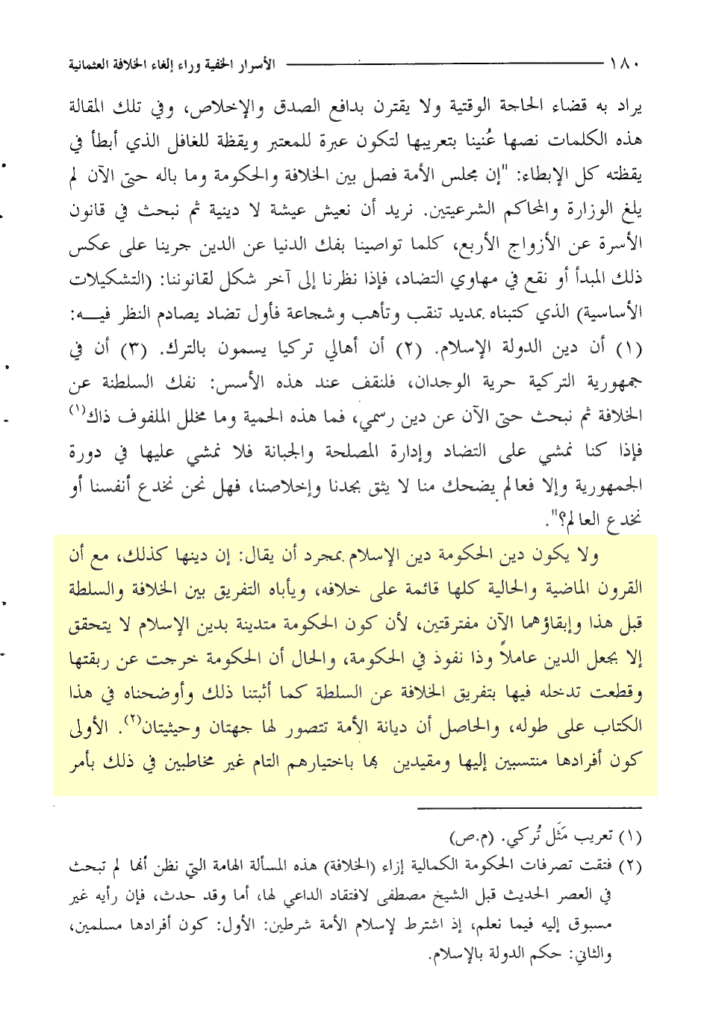
ولا يكون دين الحكومة دين الإسلام بمجرد أن يقال: إن دينها كذلك، مع أن القرون الماضية والحالية كلها قائمة على خلافه، ويأباه التفريق بين الخلافة والسلطة قبل هذا وإبقاؤهما الآن مفترقتين
And the Dīn of the government does not become the Dīn of Islām merely by it being said that its Dīn is such, while the past and present centuries all stand upon the contrary to it. And the separation between the Caliphate and the authority before this rejects it. And keeping the both of them (Caliphate and the authority of government) now separated (refutes it).
لأن كون الحكومة متدينة بدين الإسلام لا يتحقق إلا بجعل العامل عاملاً وذا نفوذ في الحكومة، والحال أن الحكومة خرجت عن ربقتها وقطعت تدخله فيها بتفريق الخلافة عن السلطة كما أثبتنا ذلك وأوضحناه في هذا الكتاب على طوله
Because the government’s being religious with the Dīn of Islām is not realized except by making the actor (Islām) operative (Caliphate) and possessed of the authority within the government. Whereas the government has left from its bond (to Islām) and cut off its (Islām’s) intervention in it (politics) by the separation of the Caliphate from the authority, just as we have established and clarified it throughout this book.
والحاصل أن ديانة الأمة تتصور لها جهتان وحيثيتان. الأولى كون أفرادها منتسبين إليها ومقيدين بها باختيارهم التام غير مخاطبين في ذلك بأمر أحد أو نهيه يبلغ درجة السلطة، فهذه ديانة الأمة بالنظر إلى أحوالهم الانفرادية
And the conclusion is that the religiosity of the Ummah is conceived as having two aspects and two considerations. The first is its individuals’ being affiliated with it (Islām) and bound by it through their full choice, without being addressed in that regard by anyone’s command or prohibition that reaches the degree of authority. This is the religiosity of the Ummah with regard to their individual conditions.
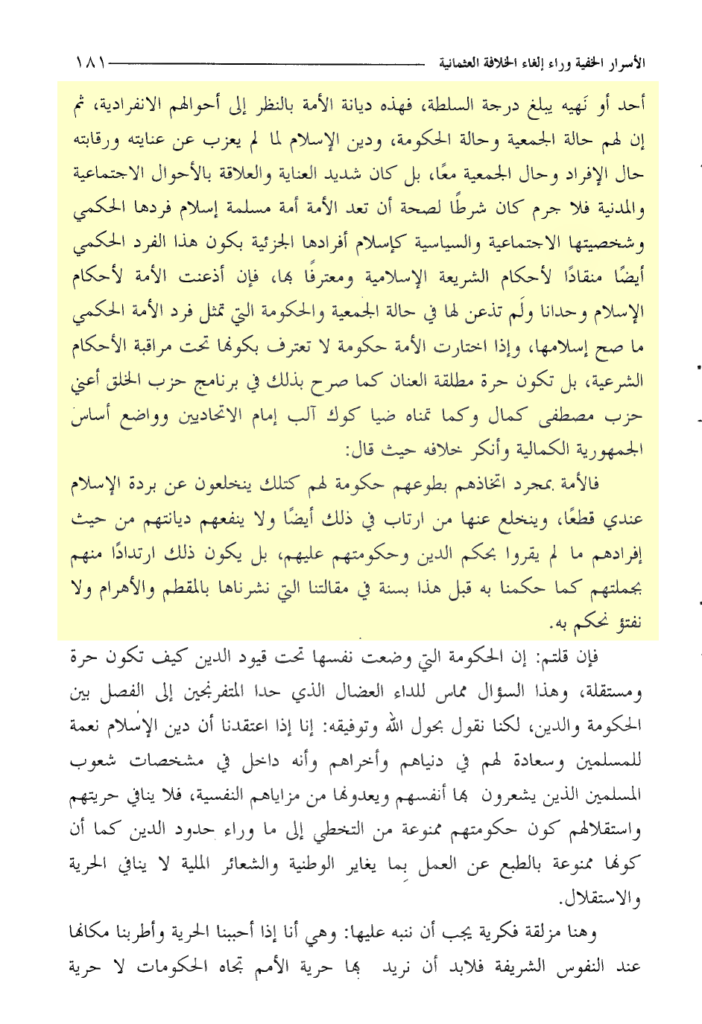
ثم إن لهم حالة الجمعية وحالة الحكومة، ودين الإسلام لما لم يعزب عن عنايته ورقابته حال الإفراد وحال الجمعية معاً، بل كان شديد العناية والعلاقة بالأحوال الاجتماعية والمدنية
Then indeed they (the Ummah) have a state of collectivity and the state of government. And since the Dīn of Islām did not leave both the individual state and the collective state from its care and its supervision – rather, it has intense concern and connection with the social and the civilian conditions.
فلا جرم كان شرطاً لصحة أن تعد الأمة أمة مسلمة إسلام فردهاً الحكمي وشخصيتها الاجتماعية والسياسية كإسلام أفرادها الجزئية يكون هذا الفرد الحكمي أيضاً منقاداً لأحكام الشريعة الإسلامية ومعترفاً بها،
Therefore, undoubtedly, it is a condition for the validity of the Ummah being considered a Muslim Ummah that, just as the Islām of particular individuals, the Islām of its juridical individual (meaning a person) and its societal and political individuality (meaning the collective) – that this juridical person (the collective) also be obedient to the rulings of the Islāmic Sharīʿa and recognizing them.
فإن أذعنت الأمة لأحكام الإسلام وحداناً ولم تذعن لها في حالة الجمعية والحكومة التي تمثل فرد الأمة الحكمي ما صح إسلامها
For indeed, if the Ummah submits to the rulings of Islām individually, but has not submitted to them (the rulings of the Sharīʿa) in the collective state and government, which represents the juridical individual of the Ummah, its Islām is not valid (they are Kuffār).
وإذا اختارت الأمة حكومة لا تعترف بكونها تحت مراقبة الأحكام الشرعية، بل تكون حرة مطلقة العنان كما صرح بذلك في برنامج حزب الخلق أعني حزب مصطفى كمال وكما تمناه ضيا كوك آلب إمام الاتحاديين وواضع أساس الجمهورية الكمالية وأنكر خلافه حيث قال
And if the Ummah chooses (iḫtāra) a government that does not recognize that it is under the control of the Sharʿī rulings, but rather is free (from the guidance of the Sharīʿa), unrestricted rein, as was proclaimed in the program of the People’s Party (Halk Fırkası. Prior name of the CHP) – I mean the party of Mustafa Kemal (Atatürk) – and as Ziya Gökalp, the (ideological) leader of the Unionists (İttihad ve Terakki) and the one who laid the foundation of the Kemalist Republic (Turkey), wished for and denied its contrary, when he said: [the words of Ziya Gökalp are missing. Alḥamdulillāh]
فالأمة بمجرد اتخاذهم بطوعهم حكومة لهم كتلك ينخلعون عن بردة الإسلام عندي قطعاً، وينخلع عنها من ارتاب في ذلك أيضاً
Thus, the Ummah, merely by their taking (as in choosing and electing – iḫtāra – as he said), through their submission, a government such as that (meaning a government that does not rule by the Sharīʿa), they without doubt, according to me, remove themselves from the mantle of Islām (they become Kuffār). And whoever doubts regarding that (that they are indeed Kuffār) also removes himself of it (Islām).
ولا ينفعهم ديانتهم من حيث إفرادهم ما لم يقروا بحكم الدين وحكومتهم عليهم، بل يكون ذلك ارتداداً منهم بجملتهم كما حكمنا به قبل هذا بسنة في مقالتنا التي نشرناها بالمقطم والأهرام ولا نفتؤ نحكم به
And their religiosity, in respect to their individuals, does not benefit them as long as they do not recognize the rule of the Dīn and its governance over them. Rather, that is apostasy (Irtidād) from them in their entirety. Just as we judged concerning it one year before this in our article which we published in al-Muqaṭṭam (a historical Cairo-based daily newspaper) and al-Ahrām (the still active, second-oldest Egyptian daily newspaper), and we do not cease judging accordingly.
In this magnificent statement Sheikh al-Islām Muṣṭafā Ṣabrī Efendī (d. 1373 هـ) outlines very important points of Tawḥīd, which both in his and our time are unconsidered by many claiming to be Muslim.
He explains in detail that the Ummah may only be considered Muslim, if they both individually and collectively submit themselves to the rule of the Sharīʿa. Their Islām is not valid, if they do not totally and entirely submit to the Dīn being entirely for Allāh in both individual and collective matters.
He – may Allāh have mercy with him – also makes clear that, by choosing – in the sense of electing (iḫtāra) – such a Shirki government, the Ummah without a doubt individually (muʿayyan) become Kuffār. The same applies to anyone who doubts that they are Kuffār.
This is because these governments are Ṭawāghīt, as they claim that their rule is superior to the rule of Allāh on earth. Choosing and electing this Shirk is in itself Shirk and constitutes approval of Kufr. Even if these Mushrikūn claim to have noble aims by worshipping other than Allāh, as they always have claimed.
Allāh says:
وَالَّذِينَ اتَّخَذُوا مِن دُونِهِ أَوْلِيَاءَ مَا نَعْبُدُهُمْ إِلَّا لِيُقَرِّبُونَا إِلَى اللَّهِ زُلْفَىٰ [39:3]
And those who take protectors besides Him (say): We only worship them that they may bring us nearer to Allāh.
And success is only by following the methodology of the last Prophet Muḥammad – may Allāh’s peace and blessings be upon him – and only through the help of Allāh.