
Why Are the Subjects of Ḥākimiyyah and al-Kufr biṭ Ṭāghūt Singled Out Today?
In the Name of Allāh, the Most Merciful.
In the present age, certain critics accuse Muslims who emphasize the subjects of Ḥākimiyyah – the exclusive sovereignty of Allāh in judgment and legislation – and al-Kufr biṭ Ṭāghūt – the rejection of false objects of worship and illegitimate authorities – of introducing an unprecedented preoccupation into Islāmic discourse. According to them, these subjects were not discussed by earlier generations with the same frequency or level of detail. Their contemporary prominence is therefore portrayed as resembling the conduct of Ahl al-Bidʿa and Ahl al-Ahwāʾ.
The underlying – but mistaken – argument is that the increased attention given to these subjects necessarily indicates that the subject itself is an innovation in the way it is being discussed. This conclusion, however, rests upon a fundamental misunderstanding of the relationship between permanent religious principles and changing historical circumstances.
Throughout Islāmic history, particular topics became especially prominent because the circumstances of a given period made them unusually urgent. The scholars of every generation did not devote equal attention to every question. Rather, they confronted those problems that were most manifest and dangerous in their own time. The prominence of a subject in a particular period did not necessarily mean that its underlying principles had only recently been invented.
A clear example can be found during the caliphate of Abū Bakr aṣ-Ṣiddīq (d. 13 هـ) – may Allāh be pleased with him. Following the demise of the Messenger of Allāh – may Allāh’s peace and blessings be upon him – from this Dunyā, a number of groups deviated and became Murtaddūn. Some of them openly, some of them following false claimants to prophethood, others refusing to fulfil the obligation of Zakāh.
Imām al-Bayhaqī al-Ashʿarī (d. 458 هـ) narrated:
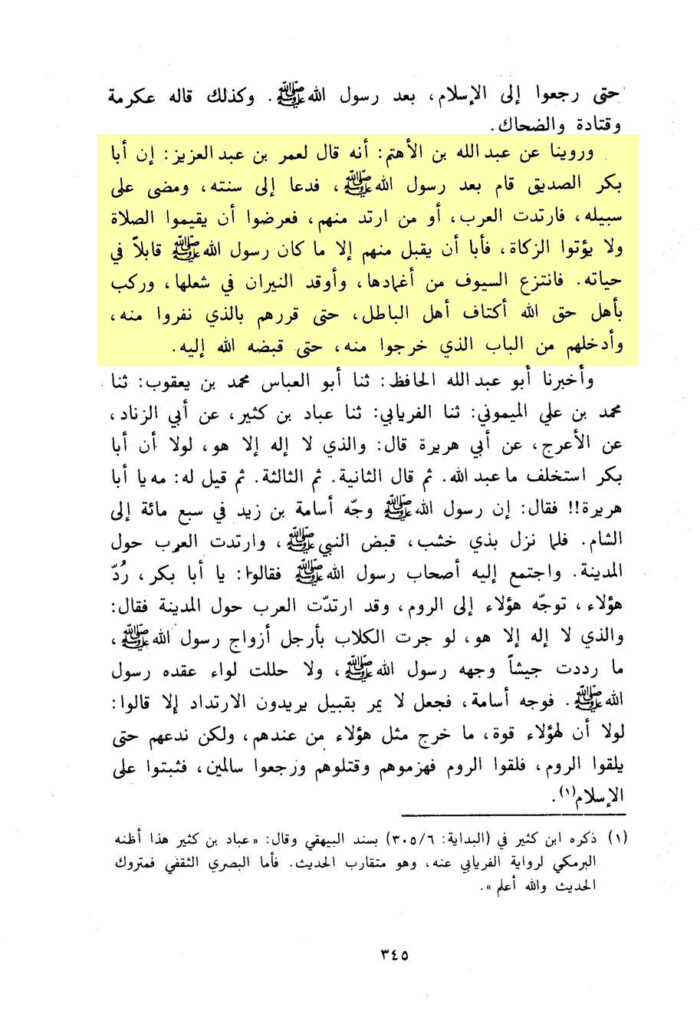
وَرُوِّينَا عَنْ عَبْدِ اللَّهِ بْنِ الْأَهْتُمْ أَنَّهُ قَالَ لِعُمَرَ بْنِ عَبْدِ الْعَزِيزِ: إِنَّ أَبَا بَكْرٍ الصِّدِّيقَ قَامَ بَعْدَ رَسُولِ اللَّهِ صَلَّى اللهُ عَلَيْهِ وَسَلَّمَ فَدَعَا إِلَى سُنَّتِهِ وَمَضَى عَلَى سَبِيلِهِ
And it was narrated to us from ʿAbdullāh bin al-Ahtum that he said to ʿUmar bin ʿAbdulazīz: Truly, Abū Bakr aṣ-Ṣiddīq rose after the Messenger of Allāh, may Allāh’s peace and blessings be upon him. So he called to his Sunna and he continued upon his path.
فَارْتَدَّتِ الْعَرَبُ أَوْ مِنَ ارْتَدَّ مِنْهُمْ فَعَرضُوا أَنْ يُقيموا الصَّلَاةَ وَلَا يُؤْتُوا الزَّكَاةَ، فَأَبَى أَنْ يَقْبَلَ مِنْهُمْ إِلَّا مَا كَانَ رَسُولُ اللَّهِ صَلَّى اللهُ عَلَيْهِ وَسَلَّمَ قَابِلًا فِي حَيَاتِهِ
Then the Arabs apostatized, or those who apostatized from them, so they offered to establish the prayer but not give the Zakāh. So he refused to accept from them, except what the Messenger of Allāh, may Allāh’s peace and blessings be upon him, accepted in his lifetime.
فَانْتَزَعَ السيُوفَ مِنْ أَغْمَادِهَا وَأَوْقَدَ النِّيرَانَ فِي شُعَلِهَا وَرَكِبَ بأَهْلِ حَقِّ اللَّهِ أَكْتَافَ أَهْلِ الْبَاطِلِ حَتَّى قَرَّرَهُمْ بِالَّذِي نَفَرُوا مِنْهُ وَأَدْخَلَهُمْ مِنَ الْبَابِ الَّذِي خَرَجُوا مِنْهُ حَتَّى قَبَضَهُ اللَّهُ إِلَيْهِ
So he drew the swords from their sheaths, lit the fires in their blazes and rode with the people of the truth of Allāh on the shoulders of the people of falsehood, until he settled them on that which they turned away from, and he brought them in (to Islām) from the gate which they had left it, until Allāh took him to Himself.
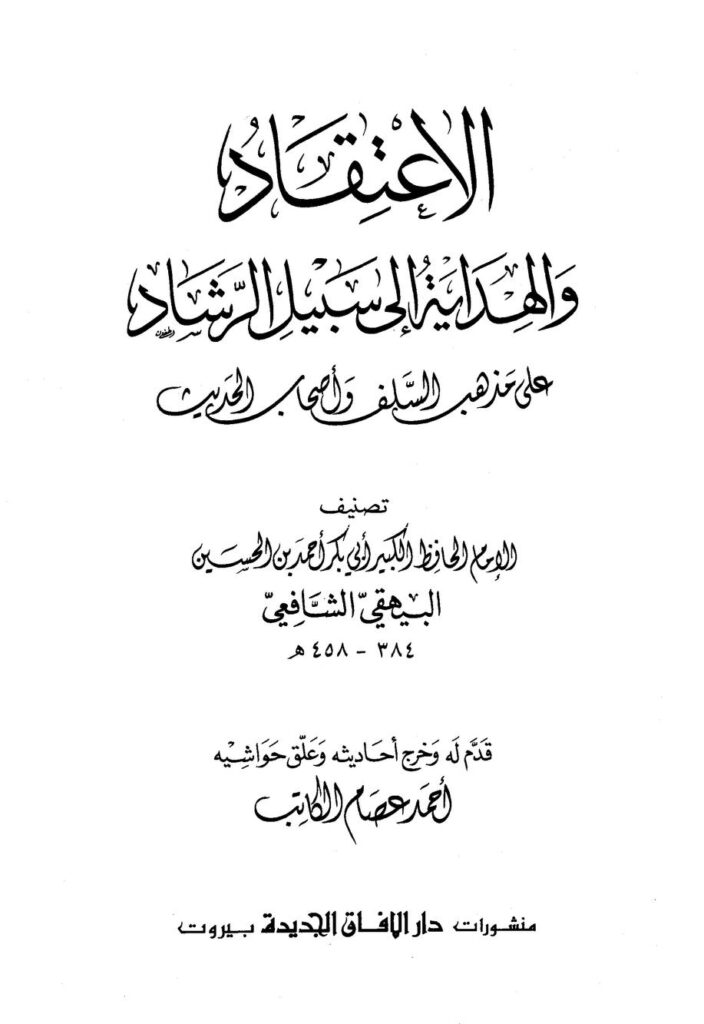
Abū Bakr – may Allāh be pleased with him – devoted a substantial part of his caliphate to the wars of Ridda. Later caliphs did not necessarily confront the same circumstances in the same form. This did not render Abū Bakr’s emphasis excessive or innovative. It merely reflected the specific challenge that confronted the Muslim community during his rule.
A comparable pattern appeared during the lifetime of Imām Aḥmad bin Ḥanbal (d. 241 هـ). In his period, the Fitna of the Muʿtazilah and their Miḥnah became the most pressing issue in the Muslim world. Earlier generations had not discussed these matters using the same technical formulations or with the same intensity.
This pattern can be observed throughout history. Whenever a particular deviation acquired influence, scholars concentrated upon it. They did not thereby claim that every other error had ceased to matter. Nor did their concentration upon one danger transform their response into an innovation. Prioritization was determined by circumstance, public need, and the degree of harm associated with the doctrine under discussion.
Therefore, in our time, among the most pressing questions are those of Ḥākimiyyah and al-Kufr biṭ Ṭāghūt.
From the era of the last Prophet Muḥammad – may Allah’s peace and blessings be upon him – until the formal abolition of the Ottoman Caliphate in 1924, the institution of the caliphate remained publicly present in one form or another. Although its political strength, territorial reach, and practical adherence to Islāmic law differed considerably from one period to another, political authority continued to be claimed in the name of Islām and was generally associated with the historical mainstream of Ahl as-Sunna wa al-Ǧamāʿa.
Even during periods in which grave Fitan arose, the Sunni tradition remained institutionally manifest. The rule of Islām, despite the misconduct of particular rulers and the general public, had not disappeared.
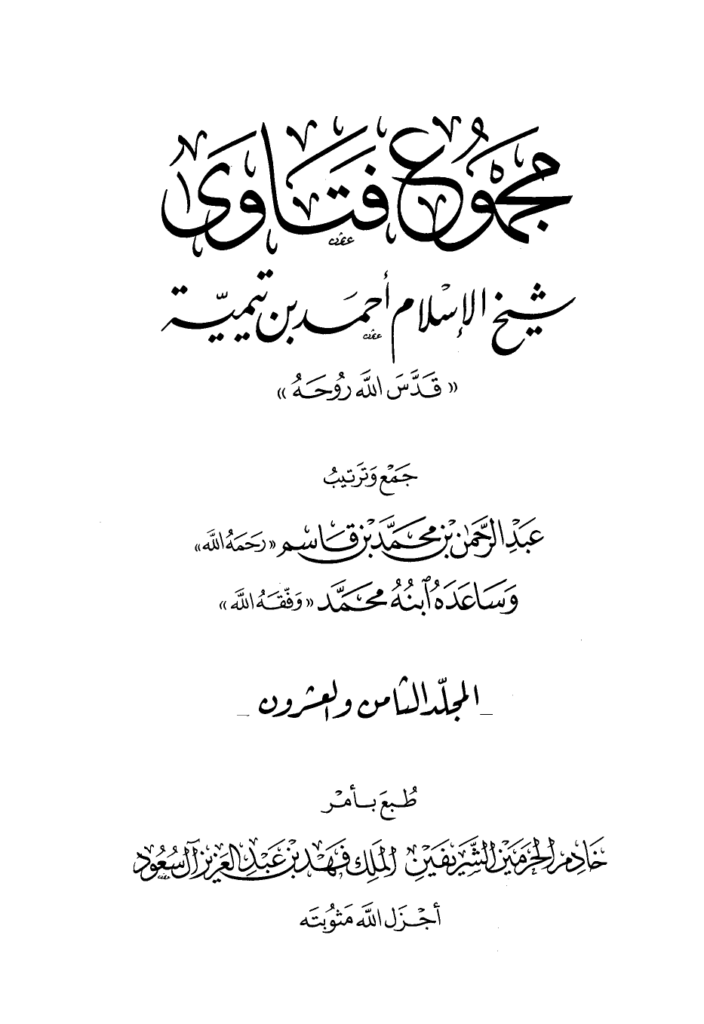
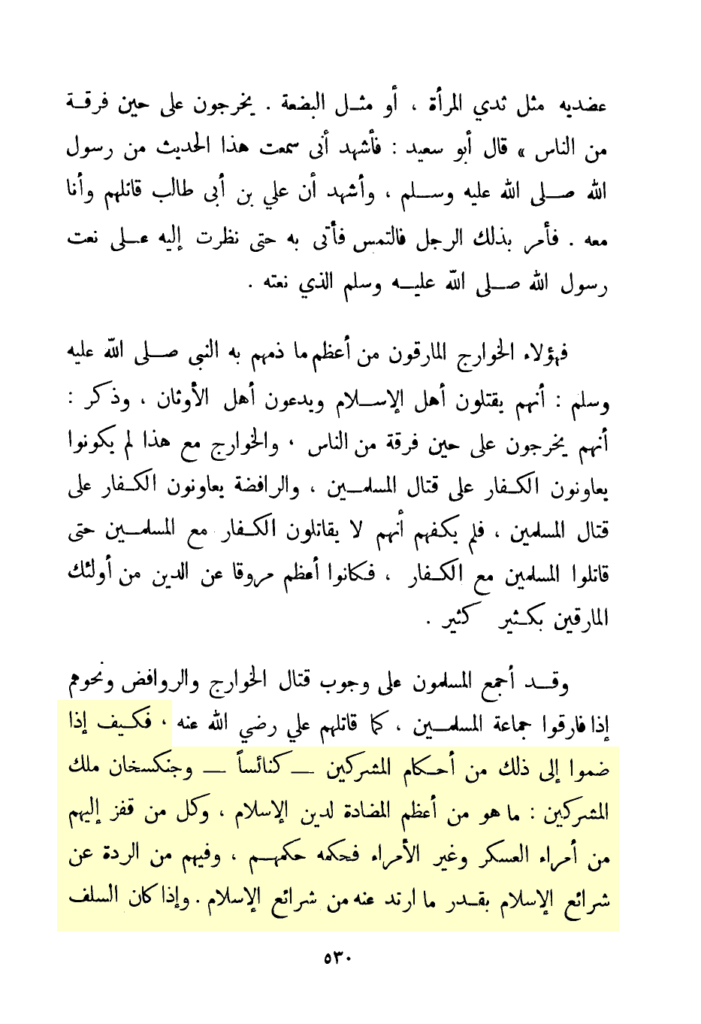
Even when some groups fell into Ridda, this did not result in an all out disappearance of the rule of Islām. Rather, they were staunchly rejected. Concerning this matter, Ibn Taymīyya (d. 728 هـ) wrote the following words, with which he agreed with the Ahl as-Sunna:
فَكَيْفَ إذَا ضَمُّوا إلَى ذَلِكَ مِنْ أَحْكَامِ الْمُشْرِكِينَ – كنائسا – وجنكسخان مَلِكِ الْمُشْرِكِينَ: مَا هُوَ مِنْ أَعْظَمِ الْمُضَادَّةِ لِدِينِ الْإِسْلَامِ
So how about if they incorporate to that from the laws of the Mushrikūn – (laws of the) churches – and (the laws of) Genghis Khan, the king of the Mushrikūn: which is among the greatest (forms of) opposition to the Dīn of Islām.
وَكُلُّ مَنْ قَفَزَ إلَيْهِمْ مِنْ أُمَرَاءِ الْعَسْكَرِ وَغَيْرُ الْأُمَرَاءِ فَحُكْمُهُ حُكْمُهُمْ وَفِيهِمْ مِنْ الرِّدَّةِ عَنْ شَرَائِعِ الْإِسْلَامِ بِقَدْرِ مَا ارْتَدَّ عَنْهُ مِنْ شَرَائِعِ الْإِسْلَامِ
And everyone who jumped to them (switched sides) among the commanders of the army and other commanders, then his judgement is their judgement (i.e. Mushrik). And among them is apostasy from the laws of Islām, to the same extent to which he apostatized from the laws of Islām.
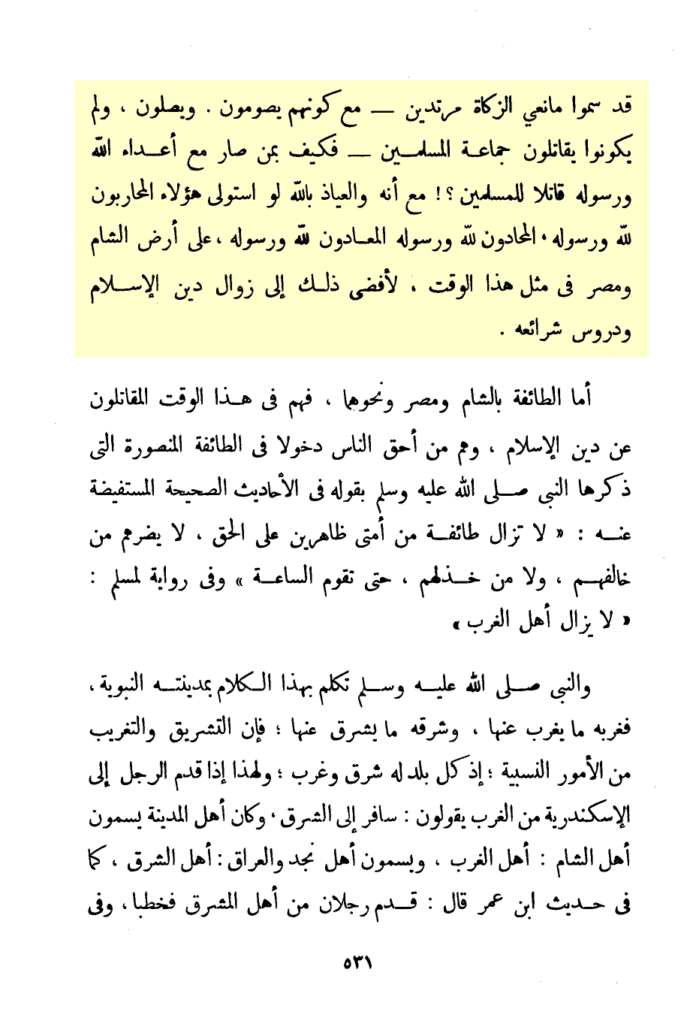
وَإِذَا كَانَ السَّلَفُ قَدْ سَمَّوْا مَانِعِي الزَّكَاةِ مُرْتَدِّينَ – مَعَ كَوْنِهِمْ يَصُومُونَ وَيُصَلُّونَ وَلَمْ يَكُونُوا يُقَاتِلُونَ جَمَاعَةَ الْمُسْلِمِينَ – فَكَيْفَ بِمَنْ صَارَ مَعَ أَعْدَاءِ اللَّهِ وَرَسُولِهِ قَاتِلًا لِلْمُسْلِمِينَ
And if the Salaf designated those who withheld the Zakāh as apostates (murtaddīn) – despite their fasting and praying, and (despite that) they were not fighting the community of the Muslims – then what about one who came to be fighting together with the enemies of Allāh and His Messenger against the Muslims?!
مَعَ أَنَّهُ وَالْعِيَاذُ بِاَللَّهِ لَوْ اسْتَوْلَى هَؤُلَاءِ الْمُحَارِبُونَ لِلَّهِ وَرَسُولِهِ الْمُحَادُّونَ لِلَّهِ وَرَسُولِهِ الْمُعَادُونَ لِلَّهِ وَرَسُولِهِ عَلَى أَرْضِ الشَّامِ وَمِصْرَ فِي مِثْلِ هَذَا الْوَقْتِ لَأَفْضَى ذَلِكَ إلَى زَوَالِ دِينِ الْإِسْلَامِ وَدُرُوسِ شَرَائِعِهِ
Simultaneously, and refuge is sought through Allāh, if these (people) who wage war against Allāh and His Messenger, who oppose Allāh and His Messenger, and who are hostile to Allāh and His Messenger were to take power over the lands of Shām and Egypt at such a time, it would certainly lead to the disappearance of the Dīn of Islām and the extinction of its laws.
Thus, we say – and all help comes only through Allāh – that singeling out Ḥākimiyyah and al-Kufr biṭ Ṭāghūt in order to clarify the foundations of Islām is the way of the Prophets.
Among the foundations of Islām are that sovereignty in judgement and legislation to Allāh alone belongs. That obedience to the creation is never absolute. That legislation can never be independent of the Sharīʿa. That no authority may claim for itself anything that belongs exclusively to the Creator. And that obedience to any ruler is invalid and void unless that ruler has submitted fully to Allāh and the Sharīʿa of His final Prophet, Muḥammad – may Allah’s peace and blessings be upon him – and is themselves a legitimate ruler according to the Sharīʿa.
Allāh says:
وَتَمَّتْ كَلِمَتُ رَبِّكَ صِدْقًا وَعَدْلًا لَّا مُبَدِّلَ لِكَلِمَاتِهِ وَهُوَ السَّمِيعُ الْعَلِيمُ [6:115]
And the word of your Lord has been fulfilled in truth and in justice. None can change His words, and He is the All-Hearing, the All-Knowing. [6:115]
And Allāh always knows best.