Is Takfīr of the Mushrikūn from Aṣl ad-Dīn?
Yes. Takfīr of the Mushrikūn – meaning that one separates between the people of Tawḥīd and Shirk – is an essential part of Tawḥīd itself. If somebody is unable to differentiate between the people of Shirk and the people of Tawḥīd he has not understood Tawḥīd itself. One can only ascribe himself to Tawḥīd if he is aware of its bare fundamentals. Anyone violating Tawḥīd by committing Shirk is known to be a Mushrik by virtue of him committing Shirk.
If one does not recognize Shirk as Shirk, he has not recognized Tawḥīd itself. Thus, Takfīr – knowing the Mushrik to be a Mushrik and on misguidance – is an essential part of Tawḥīd. It differentiates the people of Tawḥīd from the misguided ones. Knowing Arabic however, or knowing the exact word, is not a requirement.
What is meant is that one knows who is upon Tawḥīd and who is upon Shirk. And that one differentiates between both groups. Pronouncing one as being on truth and the others on being on falsehood.
Ibn Taymīyya (d. 728 هـ) confirmed that Takfīr – meaning labelling the Mushrik as Mushrik – is from Aṣl ad-Dīn – meaning that they are labelled as Mushrik even before the Message of Islām reaches them:
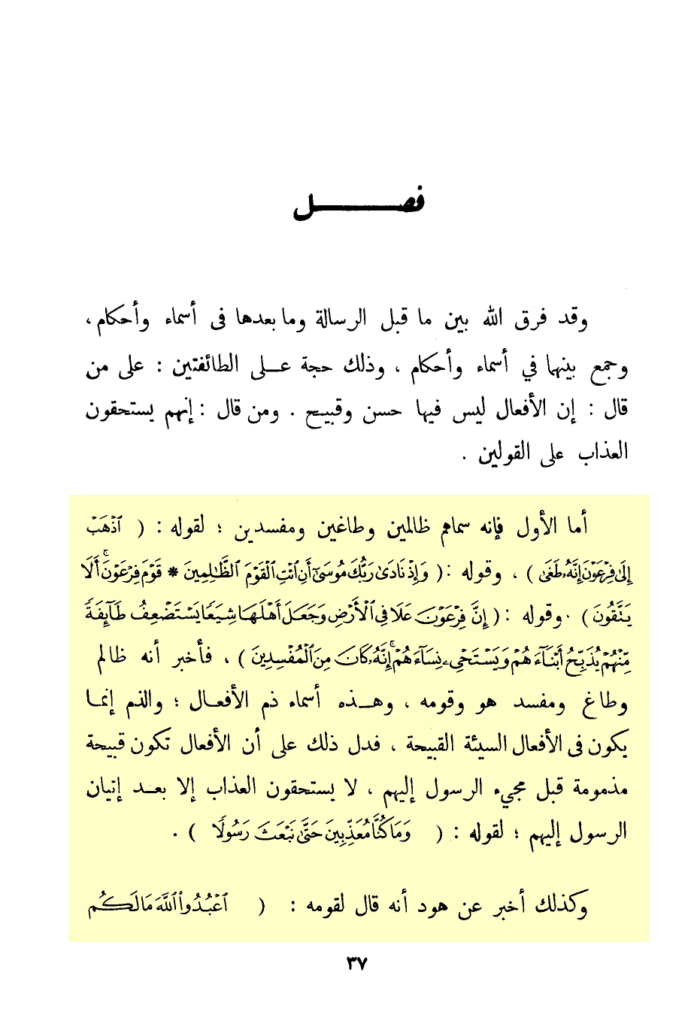
أَمَّا الْأَوَّلُ فَإِنَّهُ سَمَّاهُمْ ظَالِمِينَ وَطَاغِينَ وَمُفْسِدِينَ؛
As for the first, indeed He called them transgressors (dhālimīn), tyrants (ṭāġīn) and corrupters (mufsidīn).
لِقَوْلِهِ: {اذْهَبْ إلَى فِرْعَوْنَ إنَّهُ طَغَى}
Because of His statement: «Go to Firʿawn, indeed he has transgressed (ṭaġā)» [79:17]
وَقَوْلِهِ: {وَإِذْ نَادَى رَبُّكَ مُوسَى أَنِ ائْتِ الْقَوْمَ الظَّالِمِينَ} {قَوْمَ فِرْعَوْنَ أَلَا يَتَّقُونَ}
And His statement: «And when your Lord called Mūsā, “Come to the transgressing (dhālimīn) people. The people of Firʿawn. Will they not fear Allāh?”» [26:10-11]
وَقَوْلِهِ: {إنَّ فِرْعَوْنَ عَلَا فِي الْأَرْضِ وَجَعَلَ أَهْلَهَا شِيَعًا يَسْتَضْعِفُ طَائِفَةً مِنْهُمْ يُذَبِّحُ أَبْنَاءَهُمْ وَيَسْتَحْيِي نِسَاءَهُمْ إنَّهُ كَانَ مِنَ الْمُفْسِدِينَ}
And His statement: «Indeed, Firʿawn exalted himself on the earth. And he made its people into factions. He oppressed a group from among them. He slaughtered their sons and kept their women alive. Indeed, he was of the corrupters (mufsidīn)» [28:4]
فَأَخْبَرَ أَنَّهُ ظَالِمٌ وَطَاغٍ وَمُفْسِدٌ هُوَ وَقَوْمُهُ وَهَذِهِ أَسْمَاءُ ذَمِّ الْأَفْعَالِ؛ وَالذَّمُّ إنَّمَا يَكُونُ فِي الْأَفْعَالِ السَّيِّئَةِ الْقَبِيحَةِ
So He (Allāh) informed that he (Firʿawn) is a transgressor (dhālim), tyrant (ṭāġīn) and corrupter (mufsid). He and his people. And these are names of the blame for actions. And the blame is only for the bad, repulsive actions.
فَدَلَّ ذَلِكَ عَلَى أَنَّ الْأَفْعَالَ تَكُونُ قَبِيحَةً مَذْمُومَةً قَبْلَ مَجِيءِ الرَّسُولِ إلَيْهِمْ لَا يَسْتَحِقُّونَ الْعَذَابَ إلَّا بَعْدَ إتْيَانِ الرَّسُولِ إلَيْهِمْ؛ لِقَوْلِهِ: {وَمَا كُنَّا مُعَذِّبِينَ حَتَّى نَبْعَثَ رَسُولًا}
Thus, that proves that the actions are repulsive, blameworthy before the coming of the Messenger to them. They do not necessitate the punishment except after the arrival of the Messenger to them. Because of His statement: «And We do not punish until We send a Messenger» [17:15]
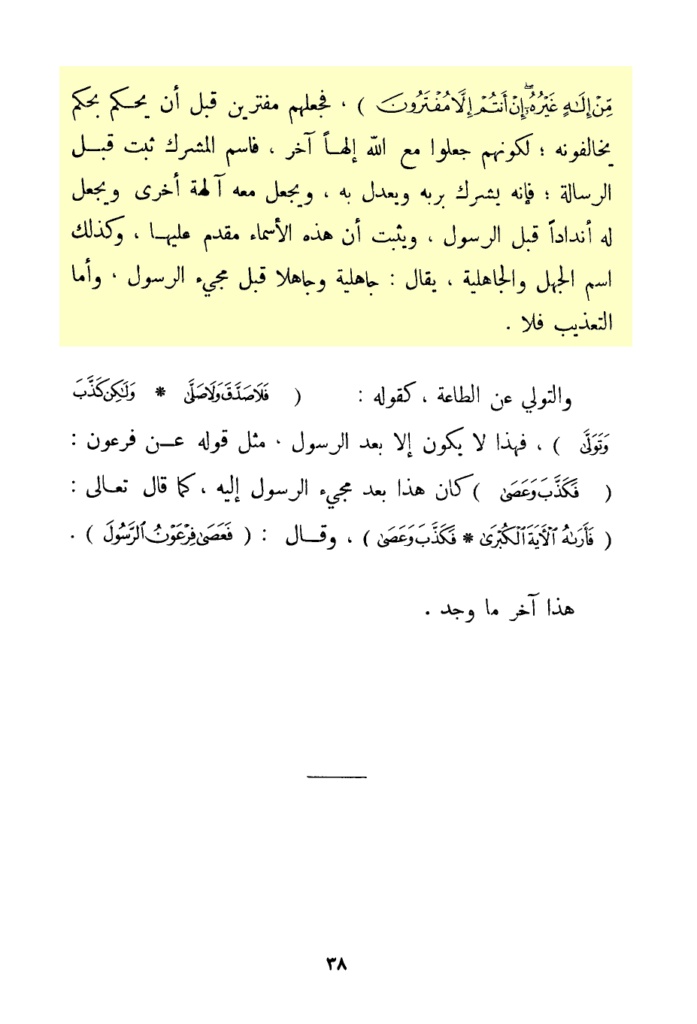
وَكَذَلِكَ أَخْبَرَ عَنْ هُودَ أَنَّهُ قَالَ لِقَوْمِهِ: {اعْبُدُوا اللَّهَ مَا لَكُمْ مِنْ إلَهٍ غَيْرُهُ إنْ أَنْتُمْ إلَّا مُفْتَرُونَ}
And likewise He (Allāh) informed from Hūd that he said to his people: «Worship Allāh. You have no god other than Him. You are nothing but fabricators (of lies)» [11:50]
فَجَعَلَهُمْ مُفْتَرِينَ قَبْلَ أَنْ يَحْكُمَ بِحُكْمِ يُخَالِفُونَهُ؛ لِكَوْنِهِمْ جَعَلُوا مَعَ اللَّهِ إلَهًا آخَرَ فَاسْمُ الْمُشْرِكِ ثَبَتَ قَبْلَ الرِّسَالَةِ؛
Thus, he deemed them fabricators (of lies) before he judged them with a ruling they oppose. Because they have assumed another god alongside Allāh. Thus, the name Mushrik was established before the message (= Aṣl ad-Dīn).
فَإِنَّهُ يُشْرِكُ بِرَبِّهِ وَيَعْدِلُ بِهِ وَيَجْعَلُ مَعَهُ آلِهَةً أُخْرَى وَيَجْعَلُ لَهُ أَنْدَادًا قَبْلَ الرَّسُولِ وَيُثْبِتُ أَنَّ هَذِهِ الْأَسْمَاءَ مُقَدَّمٌ عَلَيْهَا وَكَذَلِكَ اسْمُ الْجَهْلِ وَالْجَاهِلِيَّةِ
For indeed, he makes Shirk with his Lord, makes equals with Him, assumes other gods with Him, and makes equals for Him before (the coming of) the Messenger. And He establishes that these names are placed upon them. And likewise the name of ignorance (jahl) and Jāhilīyya.
يُقَالُ: جَاهِلِيَّةً وَجَاهِلًا قَبْلَ مَجِيءِ الرَّسُولِ وَأَمَّا التَّعْذِيبُ فَلَا
It is said: There were in Jāhilīyya and ignorance (jahl) before the coming of the Messenger (and therefore Mushrikun). And as for the punishment, then no.
Ibn Taymīyya agreed with the Ahl as-Sunna on this matter and was quoted solely for this reason.
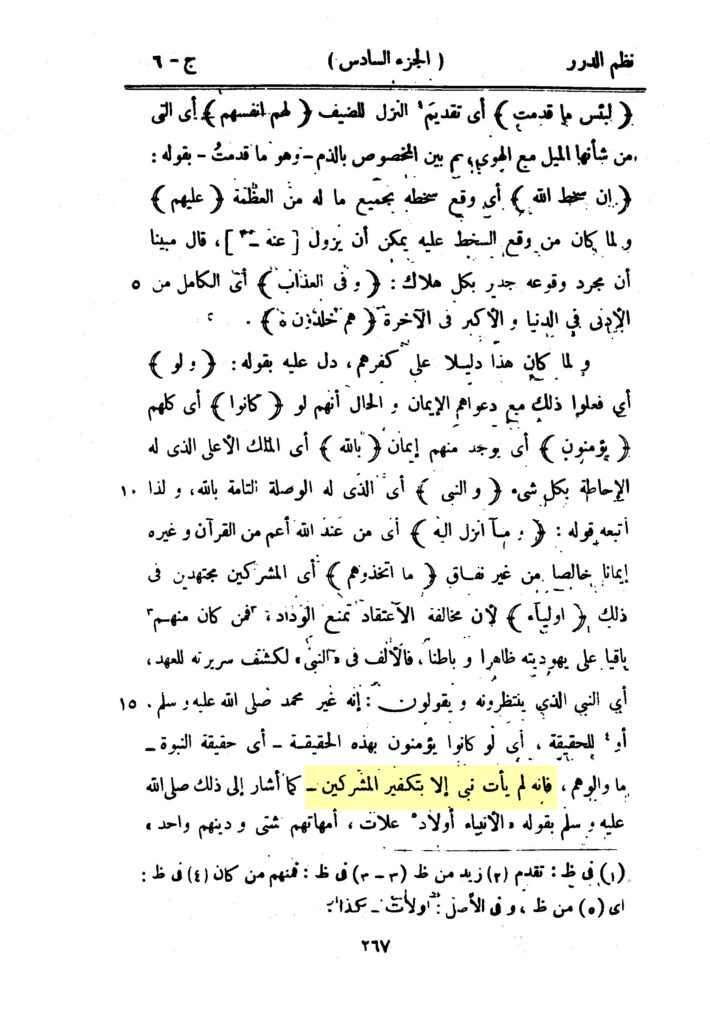
Imām al-Biqā’ī (d. 885 هـ) the student of Imām Ibn Ḥajar al-‘Asqalānī (d. 852 هـ) explained that every prophet came with Takfīr upon the Mushrikūn:
فإنه لم يأت نبي إلا بتكفير المشركين
For truly, no prophet came except with Takfīr upon the Mushrikīn.
Every single prophet came with the message of Tawḥīd. Takfīr is an essential part of Tawḥīd, without which Tawḥīd is not valid. As it is required to differentiate between Kufr and Tawḥīd – between Kāfir and Muslim. Whoever does not differentiate between Kufr and Tawḥīd is a Kāfir. The prophets differed in Shar’ī matters but all agreed on the foundation of their message: Tawḥīd. Takfīr being an essential part of it.